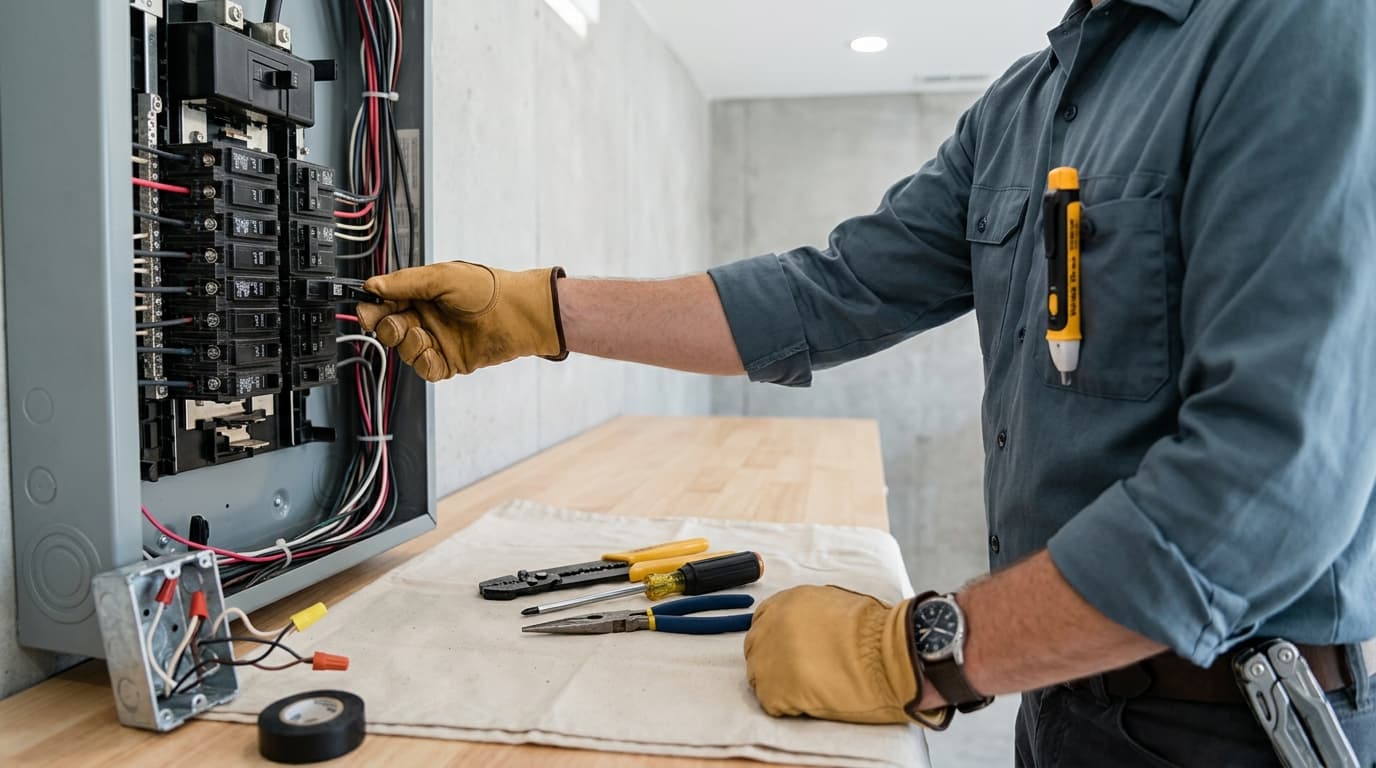
Electrical Safety: What DIYers Can (and Absolutely Can't) Touch
Electrical work is unique among home improvements: one mistake can kill you. Not "might injure you" like falling off a ladder, or "could cost money" like a bad paint job. Electrical mistakes cause house fires, electrocution, and insurance claim denials.
According to the Electrical Safety Foundation International (ESFI), electrical malfunctions account for 35,000 home fires annually, causing over 1,130 injuries, 500 deaths, and $1.4 billion in property damage. The U.S. Consumer Product Safety Commission (CPSC) reports that electrical receptacles alone are involved in 5,300 fires every year, causing 40 deaths and more than 100 consumer injuries.
A recent warehouse fire on Reddit's r/OSHA (3,860 upvotes) showed modern electrical safety standards saving lives—the electrical boxes were "absolutely cooked and destroyed, yet the electrical inside was perfectly preserved."
That's the goal: systems that fail safely. And as a DIYer, you need to know when you're capable of maintaining that safety—and when you're not.
The Golden Rule: Turn Off Power at the Breaker
Before we talk about what you CAN do, let's establish the non-negotiable:
Never work on live electrical.
Not "I'll be careful." Not "it's just a quick swap." Turn off the breaker, test with a voltage tester, THEN work.
How to Safely Turn Off Power:
Step 1: Identify the correct breaker
- Turn on the light/outlet you're working on
- Flip breakers one at a time until it turns off
- Don't trust breaker labels (they're often wrong)
Step 2: Flip the breaker OFF
Step 3: Test with a voltage tester ($10-20 at hardware store)
- Non-contact tester: Hold near wire, beeps if live
- Plug tester: Insert into outlet, shows if power present
Step 4: Put tape over the breaker switch + sign ("DO NOT TURN ON - WORK IN PROGRESS")
Why This Matters:
According to recent OSHA data, there were 5,180 non-fatal electrical injuries involving days away from work in 2023 and 2024 combined, representing a 59% increase from the previous two years. From 2011 to 2023, there were 1,940 electrical fatalities out of 70,692 total occupational deaths.
"I'll just be careful" deaths:
- Homeowner replacing outlet, touches live wire → electrocution
- DIYer installing ceiling fan, metal ladder touches live wire → electrocution
- Handyman cutting into wall, saw hits live wire → electrocution
All preventable. Turn. Off. The. Breaker.
✅ Safe for DIY: What You CAN Do
These tasks are low-risk IF you turn off power and follow instructions:
1. Replace Light Fixtures
Difficulty: Easy
Time: 30-60 minutes
Steps:
- Turn off breaker, test for voltage
- Remove old fixture (unscrew, disconnect wires)
- Connect new fixture (match wire colors: black to black, white to white, green/copper to ground)
- Secure to ceiling box, restore power, test
Common mistakes:
- Forgetting to support fixture weight while connecting wires (use helper or coat hanger hook)
- Reversing hot/neutral (won't work, or causes short)
Cost to hire: $75-150 labor + fixture
DIY savings: $75-150
2. Replace Outlets and Switches
Difficulty: Easy-Medium
Time: 15-30 minutes per outlet
Steps:
- Turn off breaker, test for voltage
- Remove cover plate, unscrew outlet/switch
- Take photo of wire connections (reference when installing new one)
- Disconnect wires, connect to new outlet/switch (match wire placement)
- Screw into box, install cover plate, restore power, test
Common mistakes:
- Not tightening wire connections (causes arcing, fire hazard)
- Reversing hot/neutral on outlets (works, but dangerous)
- Using backstab holes instead of screw terminals (fails over time)
Pro tip: Use screw terminals, not backstab holes. Wrap wire clockwise around screw.
Cost to hire: $50-100 per outlet
DIY savings: $50-100 each
3. Install GFCI Outlets (Kitchen, Bathroom)
Difficulty: Medium
Time: 30-45 minutes
Why it matters: GFCI outlets prevent electrocution near water (required by code in kitchens, bathrooms, outdoors, garages)
Steps:
- Turn off breaker, test for voltage
- Remove old outlet
- Identify LINE wires (hot coming from breaker) vs LOAD wires (hot going to downstream outlets)
- Connect LINE wires to "LINE" terminals on GFCI, LOAD wires to "LOAD" terminals
- Install, test with GFCI test button
Common mistakes:
- Reversing LINE and LOAD (GFCI won't protect downstream outlets)
- Not testing monthly (GFCI outlets wear out, need replacement every 10-15 years)
Cost to hire: $100-150 per GFCI
DIY savings: $80-130
4. Install Dimmer Switches
Difficulty: Easy
Time: 20-30 minutes
Steps:
- Turn off breaker, test for voltage
- Remove old switch, note wire connections
- Connect dimmer (black wire to hot, green to ground, cap neutral if present)
- Install, restore power, test
Common mistakes:
- Using dimmer on non-dimmable LED bulbs (causes buzzing or doesn't dim)
- Exceeding wattage rating (dimmer rated for 600W, but 10 × 100W bulbs = 1,000W → overheats)
Cost to hire: $75-125
DIY savings: $60-110
🚫 NEVER DIY: When to Call a Licensed Electrician
1. Service Panel Work (Breaker Box)
Why it's dangerous:
- Main lugs are ALWAYS live (even with main breaker off)
- 200 amps can vaporize metal tools, cause arc flash
- Arc flash = 35,000°F (hotter than surface of sun)
- ONE mistake = death
Never DIY:
- Adding/replacing breakers
- Upgrading panel (100A → 200A)
- Any work inside panel
Cost to hire: $200-500 for breaker replacement, $2,000-4,000 for panel upgrade
Cost of DIY mistake: Your life
2. New Circuits (Adding Outlets/Lights Where None Exist)
Why it's dangerous:
- Requires running new wire through walls/attic
- Must size wire correctly (wrong gauge = fire)
- Must connect to correct breaker size
- Often requires permit + inspection
Never DIY:
- Adding outlets to a room
- Installing new light circuits
- Wiring a garage/shed
Cost to hire: $200-500 per new circuit
Cost of DIY mistake: House fire, insurance denial
3. Aluminum Wiring Repair
Why it's dangerous:
- Aluminum wiring (1960s-1970s homes) expands/contracts differently than copper
- Causes loose connections → arcing → fire
- Requires special connectors (COPALUM crimp) or complete rewire
- DIY "fixes" (wire nuts, anti-oxidant paste) don't work long-term
Never DIY:
- Any work on aluminum wiring
- "Pigtailing" aluminum to copper
Cost to hire: $300-500 per outlet (COPALUM crimp), $8,000-15,000 (full rewire)
Cost of DIY mistake: House fire
4. Outdoor Wiring (Except Low-Voltage)
Why it's dangerous:
- Requires burial depth per code (12-18" depending on wire type)
- Requires weatherproof boxes, GFCI protection
- Must use correct wire type (UF cable, not Romex)
- Permit required in most areas
Never DIY:
- Installing outdoor outlets
- Wiring a hot tub/pool
- Landscape lighting (120V)
OK to DIY:
- Low-voltage landscape lighting (12V transformer-based)
Cost to hire: $200-400 per outdoor outlet, $500-1,500 for landscape lighting
5. Knob-and-Tube Wiring
Why it's dangerous:
- Ancient wiring (pre-1940s)
- No ground wire (can't install 3-prong outlets safely)
- Insulation degrades over time
- Many insurance companies won't insure homes with active knob-and-tube
Never DIY:
- Any modification to knob-and-tube wiring
Cost to hire: $8,000-20,000 (full rewire, depending on house size)
Warning Signs You Need an Electrician NOW
🔥 Immediate Danger:
- Burning smell from outlet/switch → Turn off breaker, call electrician TODAY
- Sparks/arcing when plugging in → Stop using outlet, call electrician
- Outlets/switches hot to the touch → Turn off breaker, call electrician
- Breaker trips repeatedly → Overloaded circuit OR short, call electrician
- Lights flicker when appliances turn on → Overloaded circuit, potential fire hazard
⚠️ Schedule Soon:
- Two-prong outlets (no ground) → Upgrade to GFCI or rewire
- No GFCI in kitchen/bathroom → Code violation, safety issue
- Aluminum wiring → Requires special connectors or rewire
- Knob-and-tube wiring → Insurance liability, safety issue
- Not enough outlets (using extension cords/power strips as permanent solution) → Fire hazard
Electrical Permits: When You Need Them
The 2026 National Electrical Code (NEC), published by the National Fire Protection Association, provides comprehensive safety standards for electrical installations. According to recent analysis, the 2026 NEC introduces major restructuring and expanded requirements, particularly restricting DIY electrical work in certain areas.
Generally REQUIRE Permit:
- New circuits
- Service panel upgrades
- Outdoor wiring
- Wiring a garage/shed/addition
- Generator hookup
- EV charger install
Generally DON'T Require Permit:
- Replacing light fixtures (same type)
- Replacing outlets/switches (same type)
- Replacing ceiling fans
Check local code: Some jurisdictions require permits for everything. Call your city/county building department.
Why permits matter:
- Safety: Inspector catches mistakes before they cause fires
- Insurance: Unpermitted work may void coverage
- Resale: Buyers may demand rewire if unpermitted work discovered
QuoterHub: Find Licensed Electricians Fast
Here's the typical electrician hiring experience:
- Google "electrician near me"
- Call 3-5, get voicemail
- Wait 2-3 days for callbacks
- Schedule estimates (1-2 weeks out)
- Get wildly different quotes ($200, $450, $800 for same job)
- No idea who to trust
QuoterHub fixes this:
✅ 3 licensed electrician quotes in 24-48 hours
✅ Verified licenses (we check state boards)
✅ Insured professionals (protect your home)
✅ Transparent pricing (know what you're paying for)
✅ Real reviews (past customer experiences)
Real Example:
Tom in Austin needed:
- 3 GFCI outlets installed (kitchen + bathrooms)
- 1 ceiling fan installed (bedroom)
- 1 outdoor outlet (patio)
Random electricians (Google search):
- Electrician A: $850 (seemed high, pushy sales)
- Electrician B: $320 (unlicensed handyman, sketchy)
- Electrician C: No-show for estimate
QuoterHub quotes:
- Vendor A: $520 (licensed, insured, 5-year warranty)
- Vendor B: $610 (licensed, includes permit for outdoor outlet)
- Vendor C: $480 (licensed, newer company, good reviews)
Tom chose Vendor A (best balance of price + warranty). Work done in 3 hours, passed inspection.
Savings vs Electrician A: $330
Avoided disaster from Electrician B: Priceless
FAQ: Electrical Safety Questions
Q: Can I use a two-prong adapter to plug 3-prong appliances into old outlets? A: Temporary yes, permanent no. Two-prong outlets have no ground. The adapter's ground screw must be connected to a grounded box (rare in old homes). Better solution: Install GFCI outlets (provides shock protection without ground).
Q: Why does my breaker keep tripping? A: Three reasons:
- Overloaded circuit: Too many devices on one circuit (reduce load or add circuit)
- Short circuit: Hot wire touching neutral/ground (call electrician)
- Ground fault: Current leaking to ground (install GFCI or call electrician)
Q: Can I replace a 15-amp breaker with a 20-amp breaker to stop tripping? A: NEVER. Breaker size must match wire size. 15A breaker = 14-gauge wire. If you install 20A breaker on 14-gauge wire, wire overheats and catches fire BEFORE breaker trips. Call electrician to add new circuit.
Q: What's the difference between 15-amp and 20-amp outlets? A: 20-amp outlets have a horizontal slot (T-shaped on one side). Allows 20-amp plugs. Most homes use 15-amp outlets on 15-amp circuits. 20-amp circuits (kitchen, workshop) can use either 15A or 20A outlets.
Q: How many outlets can I put on one circuit? A: Code allows up to 12 outlets on a 15A circuit, but practical limit is 8-10 (depending on what you plug in). Kitchen small appliances need dedicated 20A circuits (per code).
Q: Can I install a ceiling fan where a light fixture was? A: Only if the box is rated for ceiling fans. Standard light boxes aren't strong enough (fan will fall). Look for "fan-rated" stamp on box. If not rated, call electrician to install fan-rated box ($150-250).
Final Thoughts: Know Your Limits
Electrical work divides neatly into two categories:
Category 1: Swapping components (outlets, switches, fixtures)
- Safe for DIY if you turn off power and follow instructions
- Saves $50-150 per swap
- Low risk if done correctly
Category 2: Modifying systems (new circuits, panel work, aluminum wiring)
- NEVER DIY
- Requires permits, inspections, specialized knowledge
- One mistake = fire, electrocution, or insurance denial
The warehouse fire that inspired this post had modern safety systems that contained the damage. Your DIY work should maintain that safety—not compromise it.
When in doubt, hire a licensed electrician. Your life is worth more than the $200 you'll save.
Need an electrician? Get 3 Free Quotes →
Safety information based on National Electrical Code (NEC) and professional electrician best practices. Always check local code requirements before starting electrical work.
Need Professional Help?
Homeplexi connects you with vetted contractors, helps you compare quotes, and manages your entire home improvement project in one place.
Get Started Free →Important Safety Disclaimer
Please read this carefully before following any advice:
- Always prioritize safety: Wear appropriate protective equipment (safety glasses, gloves, etc.) when performing any home maintenance or repair work.
- Know your limits: If you're not confident in your ability to safely complete a task, hire a licensed professional. This is especially important for electrical, gas, plumbing, and structural work.
- Verify all information: The guidance provided here is based on community discussions and general knowledge. Always double-check any advice with multiple reliable sources or a licensed professional.
- Follow local codes: Building codes, electrical codes, and plumbing codes vary by location. Ensure any work complies with your local regulations and obtain necessary permits.
- Turn off power/water/gas: Before working on electrical, plumbing, or gas systems, always shut off the relevant utilities at the source.
- For emergencies: If you have a gas leak, electrical fire, major water leak, or other emergency, evacuate immediately and call emergency services (911) and your utility company.
Liability: Homeplexi provides information for educational purposes only. We are not responsible for any injury, property damage, or losses resulting from following any guidance or advice provided through this platform. Use all information at your own risk.
When in doubt, always consult a licensed, insured professional contractor. Homeplexi can help you find qualified professionals in your area.
Found this helpful? Share with others:
Related Articles
How to Lower Electric Bills: Proven Strategies That Actually Work When Basic Tips Fail
Electric bills climbing higher than expected despite energy-saving efforts
Electrical Outlet Not Working: DIY Fixes vs. When to Call an Electrician
Knowing when it's safe to DIY vs. hiring a pro
Home Repair Priorities: The 4-Quadrant System for Deciding Which Fixes Come First (When You Can't Afford Everything)
Homeowners overwhelmed by multiple needed repairs but limited budget, unsure which repairs to tackle first