HVAC Maintenance Cost: Annual Service Prices and What Skips the Bill
The Quotes Problem Most Homeowners Run Into How to Budget for HVAC Maintenance When to Spend More FAQs
Your HVAC system is the most expensive mechanical system in your home. A central air conditioner and furnace together can run $10,000 to $20,000 to replace. Routine maintenance is what separates a system that lasts 15 to 20 years from one that gives out at 10.
So what does HVAC maintenance actually cost — and what does skipping it cost you? Both questions have straightforward answers.
What You Pay for Annual HVAC Service in 2026
A standard annual tune-up runs $75 to $200 for a single system. Most HVAC companies offer a combined heating and cooling inspection for $150 to $300, covering both your furnace or heat pump and your central AC in one visit.
Here's how pricing typically breaks down by service type:
| Service | Typical Cost Range |
|---|---|
| AC tune-up (spring) | $75 – $150 |
| Furnace tune-up (fall) | $80 – $150 |
| Combined HVAC inspection | $150 – $300 |
| HVAC maintenance plan (annual contract) | $150 – $500/year |
| Filter replacement (labor + filter) | $20 – $60 per visit |
| Refrigerant recharge (if needed) | $150 – $400 |
| Coil cleaning | $100 – $400 |
Prices vary by region, system size, and whether the contractor is independent or part of a larger service company. In high-cost metros like New York or San Francisco, expect to land toward the top of these ranges.
What a Tune-Up Actually Includes
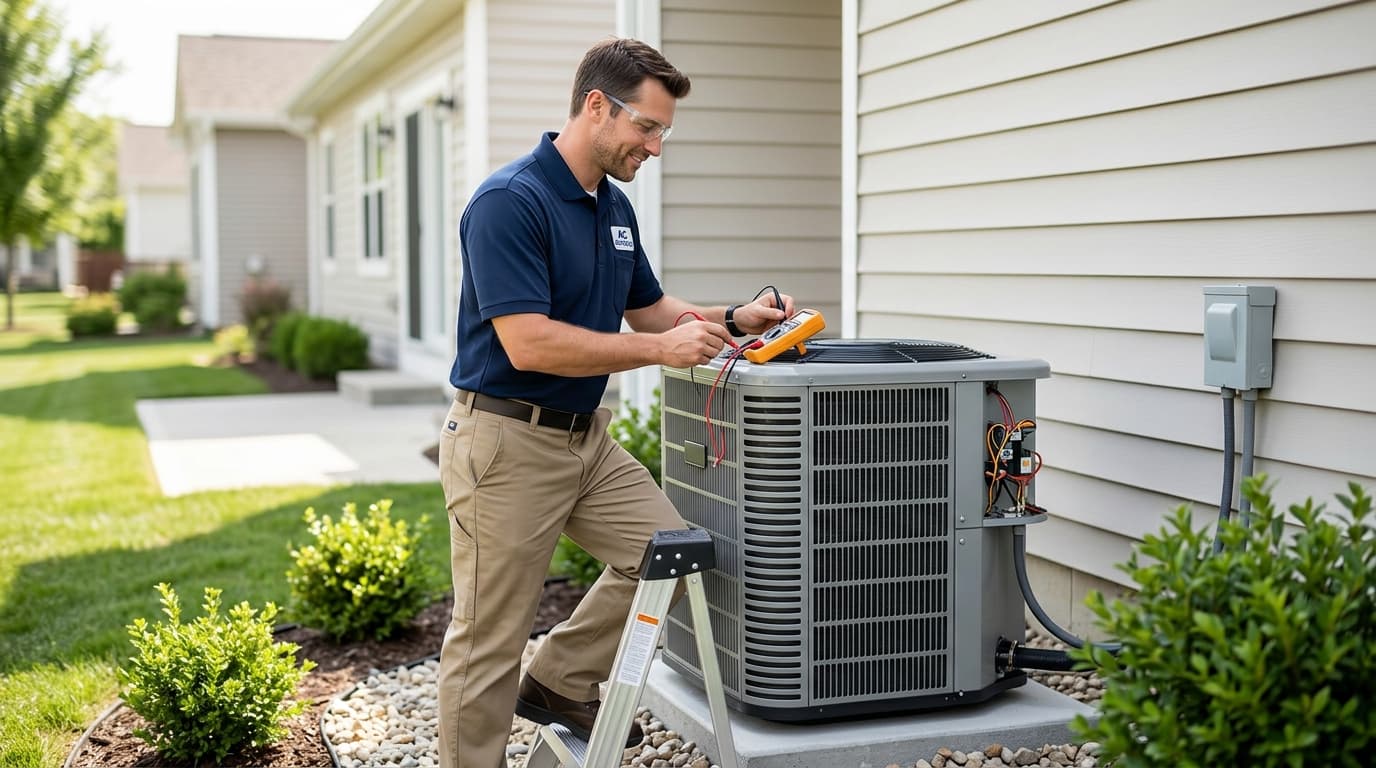
A proper HVAC tune-up is not just a filter swap. A licensed technician should inspect and clean the system, test electrical components, check refrigerant levels, measure airflow, and confirm that safety controls are functioning.
For a furnace, that means checking the heat exchanger for cracks, inspecting the burners, testing the igniter, and verifying carbon monoxide levels. For an AC unit, it means cleaning the condenser coils, checking the capacitor, testing thermostat calibration, and inspecting the condensate drain.
If a contractor quotes you $49 for a full tune-up, be skeptical. That price usually signals a diagnostic visit built around upselling repairs — not a thorough service call.
Annual Maintenance Plans vs. One-Off Visits
Many HVAC companies offer maintenance agreements covering one or two visits per year for a flat annual fee, typically $150 to $500. These plans often include priority scheduling, discounts on repairs, and no diagnostic fees.
Whether a plan makes financial sense depends on your system's age and your contractor's pricing. For an older system — 10 years or more — a maintenance plan with a reliable contractor is usually worth it. You get priority service when something breaks, and the technician already knows your equipment.
For newer systems still under manufacturer warranty, a single annual tune-up is often enough. Just keep documentation. Some manufacturers require proof of annual service to honor warranty claims.
What Skipping Maintenance Actually Costs
This is the number that matters. Deferred maintenance does not save money — it moves costs forward and multiplies them.
Higher Energy Bills
A dirty or poorly calibrated system works harder to reach the same temperature. The U.S. Department of Energy estimates that a neglected system can lose 5 to 25 percent of its efficiency over time. On a $200/month energy bill, that's $10 to $50 in monthly waste, or $120 to $600 per year.
Preventable Repairs
Most mid-season HVAC failures trace back to something a tune-up would have caught. A failing capacitor costs $150 to $300 to replace when a technician spots it during a routine visit. If it fails during a heat wave, you're paying the same repair cost plus an emergency service fee of $100 to $200 — and potentially going days without cooling.
Refrigerant leaks, clogged drain lines, and dirty evaporator coils follow the same pattern. Small problems caught early cost a fraction of what they cost after they cause secondary damage.
Shortened System Life
A well-maintained central AC unit lasts 15 to 20 years. Without regular service, expect 10 to 12. A premature replacement runs $5,000 to $12,000 for the unit alone, plus installation. Spreading that cost over 20 years instead of 12 is a meaningful difference.
Voided Warranties
Many HVAC manufacturers require documented annual maintenance to keep the warranty valid. If your compressor fails at year seven and you can't show service records, you may be paying out of pocket for a repair that should have been covered.
The Quotes Problem Most Homeowners Run Into
Knowing what HVAC maintenance should cost and actually getting a fair price are two different things. Most homeowners call one or two contractors, accept the first quote that sounds reasonable, and move on.
That works fine until it doesn't. Contractors have wide pricing discretion, and without comparison quotes, there's no way to know whether you're paying market rate or a significant premium.
Getting three quotes used to mean three phone calls, three voicemails, and three rounds of waiting. Homeplexi handles that differently. You describe the job, the AI sources licensed local contractors, and you compare bids side by side — no phone tag required. The same platform tracks your maintenance history, stores appliance records, and sends reminders when your next tune-up is due.
It's $3 per month, no credit card required to start.
How to Budget for HVAC Maintenance
A simple framework: plan for one professional service visit per year at $100 to $200, plus filter replacements every one to three months at $10 to $30 per filter depending on type.
If your system is older than 10 years, add a contingency of $300 to $500 per year for minor repairs — the capacitor replacement, drain line flush, or refrigerant top-off that comes up every few years.
Total annual HVAC maintenance. According to industry data for 2026, the average HVAC maintenance visit costs $75 to $200 for a standard tune-up, while annual service plans run $150 to $500 depending on coverage level budget for most homes: $200 to $500. That's the cost of keeping a $10,000 to $20,000 system running well.
When to Spend More
Some situations justify going above the typical range.
If your system hasn't been serviced in two or more years, a more thorough cleaning and inspection is worth the extra cost. Coil cleaning, duct inspection, and a full refrigerant check may add $200 to $400 to the bill, but you're starting from a known baseline.
If you're buying a home, a pre-purchase HVAC inspection from an independent technician — not the seller's contractor — is $100 to $200 well spent. It tells you exactly what you're inheriting before you close.
If your system is over 15 years old and showing signs of strain, get a replacement quote alongside the repair quote. Sometimes the math favors replacement, especially with current energy-efficient models that qualify for federal tax credits.
FAQs
How much does an HVAC tune-up cost in 2026? A standard tune-up for a single system runs $75 to $150. A combined heating and cooling inspection covering both your furnace and AC typically costs $150 to $300. Prices vary by region and system type.
How often should HVAC maintenance be done? Most manufacturers and contractors recommend two visits per year — one in spring before cooling season and one in fall before heating season. At minimum, one annual inspection keeps most systems in good shape.
Is an HVAC maintenance plan worth the cost? For systems older than 10 years, generally yes. Annual plans run $150 to $500 and typically include priority scheduling, discounted repairs, and no diagnostic fees. For newer systems, a single annual tune-up is usually sufficient.
What happens if I skip HVAC maintenance? Higher energy bills, more frequent breakdowns, a shorter system lifespan, and potentially voided manufacturer warranties. The cost of a neglected system almost always exceeds the cost of regular service.
How do I know if I'm getting a fair price for HVAC service? Get at least three quotes from licensed contractors before committing. Prices for the same service can vary significantly between providers, especially in competitive markets. Comparing bids side by side is the most reliable way to gauge market rate.
What should a proper HVAC tune-up include? A thorough tune-up covers filter inspection or replacement, coil cleaning, refrigerant level check, electrical component testing, thermostat calibration, drainage inspection, and a safety check of heat exchangers or burners depending on the system type.
Can I do any HVAC maintenance myself? Yes. Changing air filters every one to three months is the single most impactful DIY task. Keeping the outdoor condenser unit clear of debris and ensuring vents are unobstructed also helps. Refrigerant, electrical, and coil work all require a licensed technician.
Annual HVAC maintenance isn't optional if you want your system to last. The cost is predictable and manageable. What isn't manageable is a mid-summer compressor failure or a heating system that quits in January because a $150 tune-up never happened.
Know what the service should cost, get comparison quotes, and keep records. Those three habits go a long way toward protecting one of the most expensive systems in your home.
Need Professional Help?
Homeplexi connects you with vetted contractors, helps you compare quotes, and manages your entire home improvement project in one place.
Get Started Free →Important Safety Disclaimer
Please read this carefully before following any advice:
- Always prioritize safety: Wear appropriate protective equipment (safety glasses, gloves, etc.) when performing any home maintenance or repair work.
- Know your limits: If you're not confident in your ability to safely complete a task, hire a licensed professional. This is especially important for electrical, gas, plumbing, and structural work.
- Verify all information: The guidance provided here is based on community discussions and general knowledge. Always double-check any advice with multiple reliable sources or a licensed professional.
- Follow local codes: Building codes, electrical codes, and plumbing codes vary by location. Ensure any work complies with your local regulations and obtain necessary permits.
- Turn off power/water/gas: Before working on electrical, plumbing, or gas systems, always shut off the relevant utilities at the source.
- For emergencies: If you have a gas leak, electrical fire, major water leak, or other emergency, evacuate immediately and call emergency services (911) and your utility company.
Liability: Homeplexi provides information for educational purposes only. We are not responsible for any injury, property damage, or losses resulting from following any guidance or advice provided through this platform. Use all information at your own risk.
When in doubt, always consult a licensed, insured professional contractor. Homeplexi can help you find qualified professionals in your area.
Found this helpful? Share with others:
Related Articles
Is a Home Warranty Worth It in 2026? What the Fine Print Actually Says
You're staring at a $6,000 HVAC replacement quote and wondering if a home warranty would have saved you....
Electrician Cost Per Hour in 2026: What Affects the Rate and How to Reduce It
Electricians charge $50-$150 per hour in 2026. Learn what affects rates, how to compare quotes, and find licensed electricians for your electrical work.
How Much Does a Plumber Charge Per Hour in 2026?
Plumbers charge $45-$200 per hour in 2026 depending on the job. Learn what's fair pricing, what affects rates, and how to find licensed plumbers near you.