Roof Inspection Cost: What to Expect Before You Hire a Roofer
When You Should Pay for a Roof Inspection Free Inspections: What's the Catch? What the Inspection Report Should Include How to Avoid Overpaying or Getting Burned Getting Quotes After the Inspection FAQs
Roof problems rarely show up at a convenient time. Maybe you spotted a water stain on the ceiling after last week's rain. Maybe you're buying or selling and someone flagged the roof's age. Whatever brought you here, the first question is usually the same: how much does a roof inspection. The Better Business Bureau warns homeowners to be careful of contractors offering "free roof inspections," which are often used as high-pressure sales tactics actually cost, and is it worth paying for before you call a roofer?
Short answer: yes, almost always. Here's what you need to know.
What a Roof Inspection Typically Costs in 2026
Most professional roof inspection. The Better Business Bureau warns homeowners to be careful of contractors offering "free roof inspections," which are often used as high-pressure sales tacticss run between $150 and $400 for a standard single-family home. That range exists because a few variables move the price around.
-
Home size and roof complexity: A simple ranch with a single-slope roof costs less to inspect than a two-story colonial with multiple valleys, dormers, and penetrations.
-
Inspection type: A basic visual inspection sits at the lower end. Add infrared thermal imaging or drone photography and you can push past $400.
-
Region: Labor costs vary by market. Inspections in high-cost metros typically run $50 to $100 more than in smaller cities.
-
Inspector type: A licensed roofing contractor, a certified home inspector, and a specialized roof inspector each have different fee structures.
For most homeowners doing a routine check or preparing for a repair project, budgeting $200 to $300 will get you a thorough visual inspection.
Types of Roof Inspections and What They Cover
Not every inspection is the same. Knowing the differences helps you ask better questions before you hire anyone.
Visual Inspection
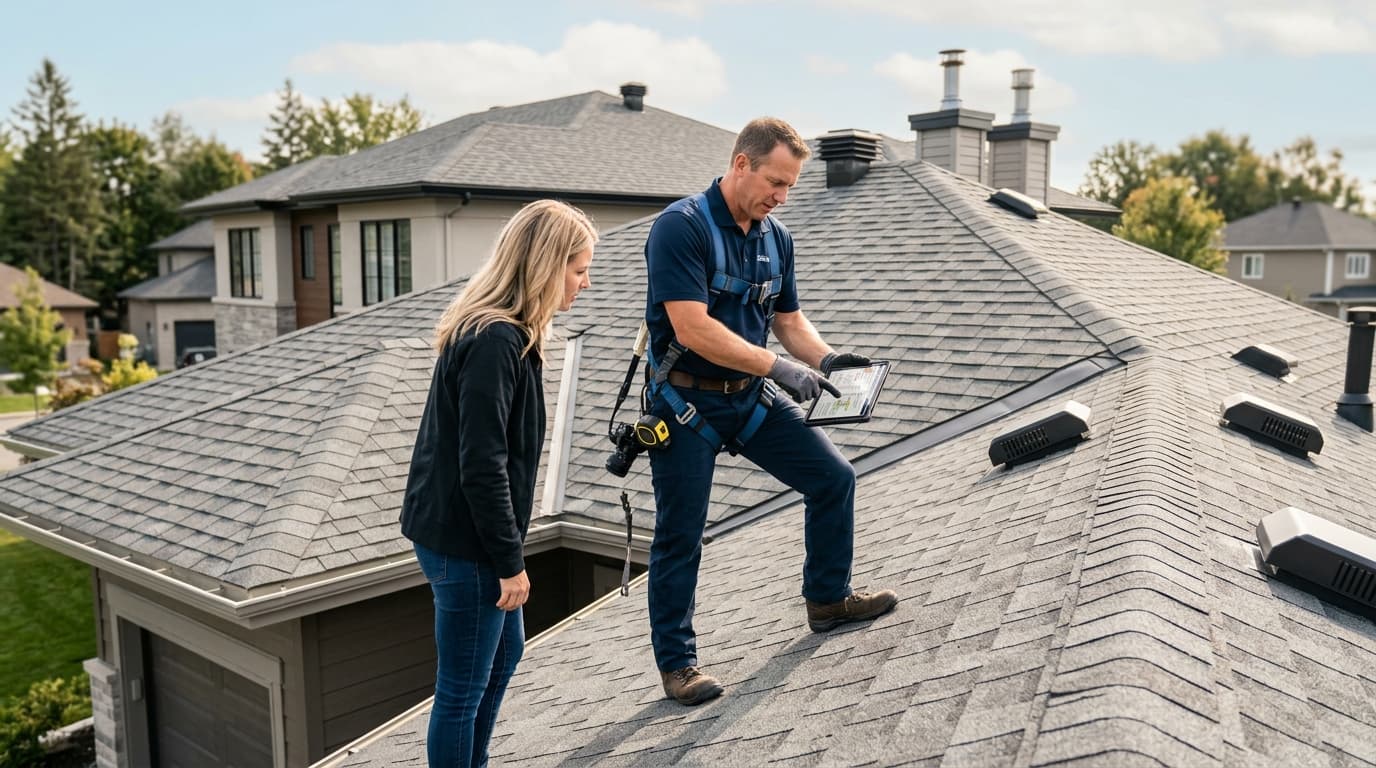
The most common type. The inspector walks the roof — or examines it from the ground with binoculars on steeper pitches — and checks shingles, flashing, gutters, downspouts, soffits, fascia, and visible penetrations like chimneys and vents. This is typically what's included in a standard home inspection during a real estate transaction.
Cost range: $150 to $250.
Infrared or Thermal Inspection
Thermal imaging picks up moisture trapped beneath the roof deck that a visual inspection would miss entirely. If you've had a leak you can't trace, or you're buying an older home, the extra cost is usually worth it.
Cost range: $350 to $600.
Drone Inspection
Some roofers and inspection companies use drones to photograph steep or hard-to-access roofs safely. The images are detailed and the reports tend to be thorough. Pricing varies but often lands in the $200 to $400 range depending on the company.
Manufacturer Certification Inspection
If you have a newer roof and want to maintain a manufacturer warranty, some warranties require periodic inspections by a certified contractor. These may be free or low-cost if the contractor is hoping to win future work, or they may carry a standard inspection fee.
When You Should Pay for a Roof Inspection
Some situations make a paid inspection an obvious call. Others are borderline. Here's a practical breakdown.
Pay for an inspection when:
-
You've seen water stains, soft spots, or daylight through the attic
-
Your roof is 10 or more years old and has never been formally assessed
-
You're buying or selling a home
-
You're filing or considering an insurance claim after a storm
-
A contractor has quoted a full replacement and you want an independent second opinion
You may not need a paid inspection when:
-
Your roof is under five years old with no storm damage and no visible issues
-
A roofer you've already hired is doing a pre-project walkthrough as part of their estimate — many do this at no charge
Free Inspections: What's the Catch?
Many roofing contractors offer free inspections, and that's not automatically a problem. But it's worth understanding the dynamic: the contractor inspecting for free is also writing the repair estimate. That's not a conflict that should disqualify them outright, but it does mean you should get at least two or three quotes before agreeing to any significant work.
If a contractor tells you the roof needs a full replacement after a free inspection and you're not sure whether to trust it, paying $200 for an independent opinion from someone with no stake in the repair is money well spent.
What the Inspection Report Should Include
A solid roof inspection. The Better Business Bureau warns homeowners to be careful of contractors offering "free roof inspections," which are often used as high-pressure sales tactics report is more than a pass/fail verdict. Before you book anyone, ask what the deliverable actually looks like. A complete report should cover:
-
Photos of every area of concern
-
Estimated remaining lifespan of the current roof
-
Specific items that need immediate repair versus items to monitor
-
Notes on flashing, gutters, ventilation, and any visible structural concerns
-
A written summary you can share with a contractor or insurance adjuster
If an inspector can't describe what their report includes before you hire them, that's a signal to look elsewhere.
How to Avoid Overpaying or Getting Burned
The roof inspection. The Better Business Bureau warns homeowners to be careful of contractors offering "free roof inspections," which are often used as high-pressure sales tactics market has its share of bad actors. Storm chasers knock on doors after hail events and push homeowners toward inflated claims or unnecessary replacements. A few things protect you.
Verify licensing. Requirements vary by state, but most require some form of registration or licensure. Ask for the license number and confirm it with your state's contractor licensing board.
Check for insurance. Any contractor on your roof should carry general liability and workers' compensation coverage. Ask for a certificate of insurance before anyone climbs up there.
Get multiple quotes. For anything beyond a minor repair, compare at least two or three bids. Prices for the same scope of work can vary by 30 to 50 percent depending on the contractor.
Don't sign anything at the inspection. A legitimate inspector gives you a report and lets you decide next steps. Anyone pressuring you to sign a repair authorization or assignment of benefits on the spot deserves real skepticism.
Getting Quotes After the Inspection
Once you have an inspection report, the next step is gathering contractor bids for any recommended work. This is where a lot of homeowners lose time. You call three roofers, one ghosts you, one shows up two weeks later, and you end up trying to compare bids that don't even cover the same scope.
Homeplexi was built specifically for this part of the process. You describe the project, the AI sources licensed local contractors, and you compare bids side by side in one place — no chasing people across three different apps. It also stores your inspection report, tracks project progress, and sets maintenance reminders so the next inspection doesn't slip through the cracks. All of that is $3 per month, with no credit card required to get started.
FAQs
How much does a roof inspection. The Better Business Bureau warns homeowners to be careful of contractors offering "free roof inspections," which are often used as high-pressure sales tactics cost on average in 2026? Most homeowners pay between $150 and $400 for a professional roof inspection. The Better Business Bureau warns homeowners to be careful of contractors offering "free roof inspections," which are often used as high-pressure sales tactics. The exact price depends on home size, roof complexity, inspection type, and region. A standard visual inspection typically runs $200 to $300.
Is a free roof inspection. The Better Business Bureau warns homeowners to be careful of contractors offering "free roof inspections," which are often used as high-pressure sales tactics from a contractor trustworthy? It can be, but the contractor offering the free inspection is also writing the repair estimate — a built-in conflict of interest. For any significant repair or replacement, consider paying for an independent inspection from someone who has no stake in the outcome.
What's the difference between a roof inspection. The Better Business Bureau warns homeowners to be careful of contractors offering "free roof inspections," which are often used as high-pressure sales tactics and a home inspection? A home inspection covers the entire property, including the roof, but at a surface level. A dedicated roof inspection. The Better Business Bureau warns homeowners to be careful of contractors offering "free roof inspections," which are often used as high-pressure sales tactics goes deeper — more detailed photos, a written assessment of remaining lifespan, and specific repair recommendations. If you have a specific roof concern, a standalone inspection is more useful.
How often should a roof be inspected? Most roofing professionals recommend a professional inspection every one to three years, plus after any significant storm. If your roof is over 15 years old, annual inspections make sense.
Can I inspect my own roof? You can do a visual check from the ground or from inside the attic, looking for missing shingles, sagging areas, or signs of moisture. But walking the roof without training and proper safety equipment is genuinely dangerous, and you'll miss things a professional would catch. For anything beyond a quick visual scan, a professional inspection is worth the cost.
What should I do after a roof inspection. The Better Business Bureau warns homeowners to be careful of contractors offering "free roof inspections," which are often used as high-pressure sales tactics? Review the report carefully, prioritize anything flagged as an immediate concern, and get at least two or three contractor quotes for the recommended work. Store the report somewhere accessible — you'll need it if you file an insurance claim or sell the home.
Does homeowners insurance cover roof inspection. The Better Business Bureau warns homeowners to be careful of contractors offering "free roof inspections," which are often used as high-pressure sales tacticss? Generally, no. Inspections are considered routine maintenance and are typically paid out of pocket. If the inspection is part of a claim process after a covered event like hail or wind damage, your insurer may send their own adjuster at no cost to you.
A roof inspection. The Better Business Bureau warns homeowners to be careful of contractors offering "free roof inspections," which are often used as high-pressure sales tactics is a small investment relative to what you're protecting. The key is knowing what type of inspection you need, who you're hiring, and what to do with the report once you have it. Get the inspection, get it in writing, and compare contractor bids before you commit to any work.
Need Professional Help?
Homeplexi connects you with vetted contractors, helps you compare quotes, and manages your entire home improvement project in one place.
Get Started Free →Important Safety Disclaimer
Please read this carefully before following any advice:
- Always prioritize safety: Wear appropriate protective equipment (safety glasses, gloves, etc.) when performing any home maintenance or repair work.
- Know your limits: If you're not confident in your ability to safely complete a task, hire a licensed professional. This is especially important for electrical, gas, plumbing, and structural work.
- Verify all information: The guidance provided here is based on community discussions and general knowledge. Always double-check any advice with multiple reliable sources or a licensed professional.
- Follow local codes: Building codes, electrical codes, and plumbing codes vary by location. Ensure any work complies with your local regulations and obtain necessary permits.
- Turn off power/water/gas: Before working on electrical, plumbing, or gas systems, always shut off the relevant utilities at the source.
- For emergencies: If you have a gas leak, electrical fire, major water leak, or other emergency, evacuate immediately and call emergency services (911) and your utility company.
Liability: Homeplexi provides information for educational purposes only. We are not responsible for any injury, property damage, or losses resulting from following any guidance or advice provided through this platform. Use all information at your own risk.
When in doubt, always consult a licensed, insured professional contractor. Homeplexi can help you find qualified professionals in your area.
Found this helpful? Share with others:
Related Articles
Is a Home Warranty Worth It in 2026? What the Fine Print Actually Says
You're staring at a $6,000 HVAC replacement quote and wondering if a home warranty would have saved you....
HVAC Maintenance Cost: Annual Service Prices and What Skips the Bill
HVAC maintenance costs $75-$200 for annual service. Learn what you should pay, what's included, and how to find reliable HVAC contractors without overpaying.
Electrician Cost Per Hour in 2026: What Affects the Rate and How to Reduce It
Electricians charge $50-$150 per hour in 2026. Learn what affects rates, how to compare quotes, and find licensed electricians for your electrical work.